2026-10-12 · Tom Ashbury
Why Is Your Dryer Not Heating Properly?
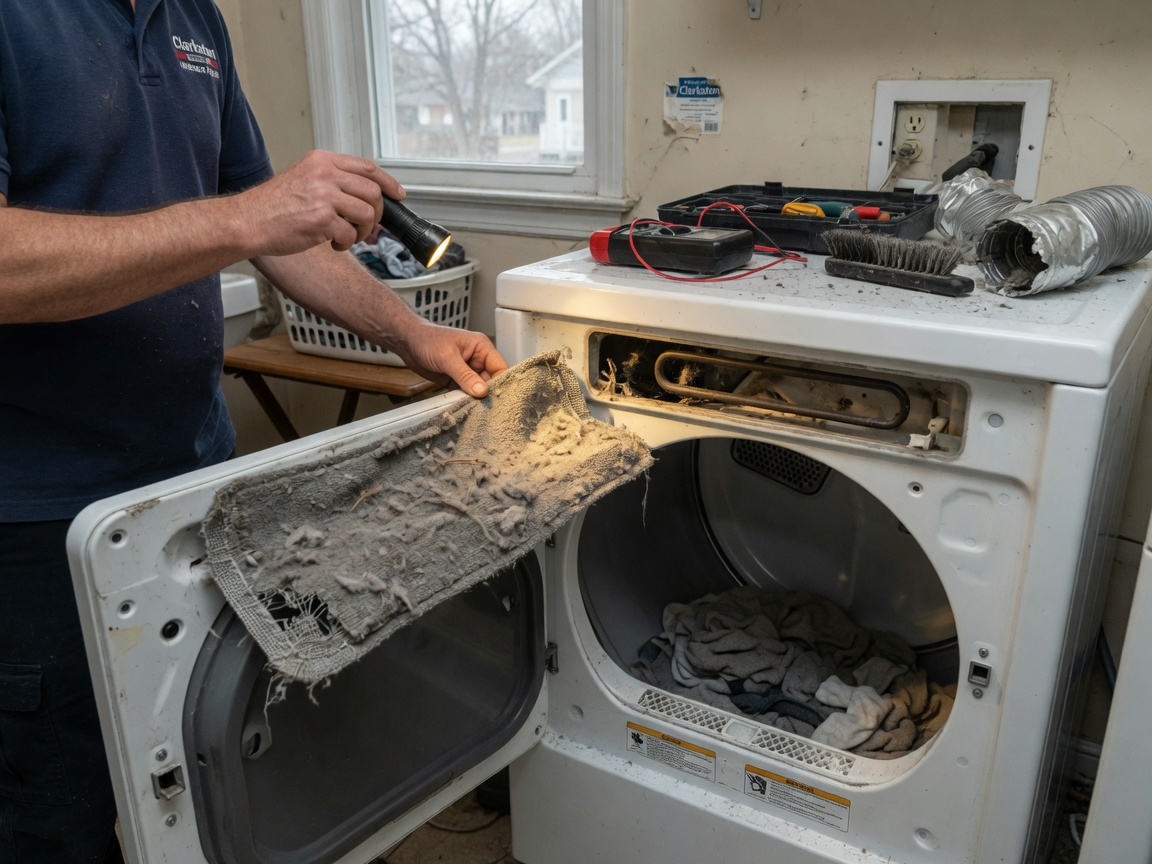
In Village of Clarkston homes, a dryer that stops producing heat usually points to a clogged vent, failed heating element, or thermostat issue rather than needing full replacement. These failures appear often in Oakland County properties where homes from the 1970s and 1980s still use original ductwork that collects lint over decades.
Vent Blockages and Airflow Restrictions
Restricted exhaust vents rank as the leading cause of no-heat complaints in Clarkston. Homes near Sashabaw Road and surrounding neighborhoods often route dryer ducts through basements or crawl spaces where turns and long runs trap lint. When airflow drops, the safety thermostat shuts down the heating circuit to prevent overheating. Residents notice clothes still damp after full cycles and a musty smell from the machine. Clearing the vent requires removing the duct from the wall connection, then using a brush or vacuum to extract buildup that can reach several inches thick in older installations. Annual cleaning prevents most airflow-related shutdowns, especially before winter when indoor drying increases.
Heating Element and Thermostat Failures
Electric dryers rely on a coiled heating element that can break after 8–12 years of use. In Clarkston’s older housing stock, 240-volt circuits sometimes deliver inconsistent power because of aging breakers or loose connections at the panel. When the element fails, the dryer tumbles but produces no warmth. Gas models instead depend on an igniter and gas valve that wear from repeated cycling. Technicians test continuity with a multimeter at the element terminals and check the high-limit thermostat for open circuits. Replacement parts cost $80–$200 depending on model, and labor time stays under two hours when the unit is accessible.
Moisture and Seasonal Effects on Performance
Michigan winters bring lower indoor humidity that forces dryers to work harder on heavier loads. Village of Clarkston properties with uninsulated laundry rooms experience greater temperature swings that stress the moisture sensor and control board. Lint filters left partially blocked after each load reduce efficiency further. Homeowners can verify sensor function by running a timed cycle on low heat and checking if the machine shuts off early. Persistent dampness after two cycles signals either a failed sensor or vent restriction that needs professional inspection before the heating circuit sustains damage.
Electrical Supply and Safety Checks
Many Clarkston homes built before 1990 still have aluminum wiring or undersized circuits feeding the dryer outlet. A loose connection at the receptacle can cause voltage drop that prevents the element from reaching full temperature. Technicians first confirm 240 volts at the outlet with the dryer unplugged, then inspect the cord and terminal block for burned spots. Never bypass thermal fuses during troubleshooting, as these devices protect against fire hazards when airflow is blocked. Documented voltage readings and visual inspections form the basis for any repair recommendation.
When Professional Service Becomes Necessary
Persistent no-heat conditions after basic filter and vent cleaning require diagnosis with specialized tools. Dryer repair technicians carry replacement elements, thermostats, and vent brushes sized for local installations. For homes in nearby Waterford or Lake Orion, the same common failure patterns appear due to similar construction eras. Readers can review Essential Dryer Vent Cleaning and Safety Tips for step-by-step maintenance that extends equipment life. If the unit is over 10 years old and multiple components test faulty, comparing repair cost against replacement value helps decide next steps. Ashbury Co operates 24/7 from 6300 Sashabaw Rd, Village of Clarkston, MI 48346 to handle these calls.